How to Optimize Your Website for Voice Search: A Complete SEO Guide
Voice search is the way people speak to search tools instead of typing. It feels quick, simple and natural. That is why Voice search optimization now matters more than ever.
Google is steadily moving search toward voice based, real-time and AI powered experiences. Search Live now supports interactive voice and camera conversations in over 200 countries and territories. Google’s AI features also surface helpful links and support more natural search paths.
For brands, this shift is huge. It changes how users ask questions. It changes how search engines read content. It also changes how you should write, structure and tune your pages. That is the heart of this SEO Guide for voice search.
1. How Voice Search Works
Voice search starts with speech recognition. A device listens, turns speech into text and sends the query to a search engine. AI and advanced language models then help the search engine understand context, intent and the meaning behind the query.
Google has said it now handles more conversational queries better than before. Its language systems are built to understand natural phrasing, not just keyword strings. That matters because people speak in full questions. They also add extra words that typed searches often skip.
In simple terms, typed search is short and sharp. Voice search is longer and more human.
Text search vs voice search
Typed query: “best dentist Kochi”
Spoken query: “Who is the best dentist near me in Kochi?”
Typed search often uses fragments. Voice search often uses full questions, local intent and clear needs. That is why Voice search optimization must focus on how people talk, not just how they type.
2. Why Voice Search Optimization is Important
Voice search keeps growing because mobile devices, smart speakers, car systems and wearables are now part of daily life. Google’s Search Live push also shows how fast spoken search is evolving.
It matters for four big reasons:
- More mobile use
People search while walking, driving, cooking, or multitasking. - More local intent
Voice users often ask for nearby places, services, or hours. - More answer style queries
Users want quick, direct results. That lifts the value of clear content and snippet ready text. - More conversational search behavior
Search engines now try to understand meaning, not just exact words. Google’s Search Essentials still stress that good SEO helps both users and search engines understand your content.
For modern brands, Voice search optimization is not a side task. It is part of core SEO.
3. Strategies to Optimize for Voice Search
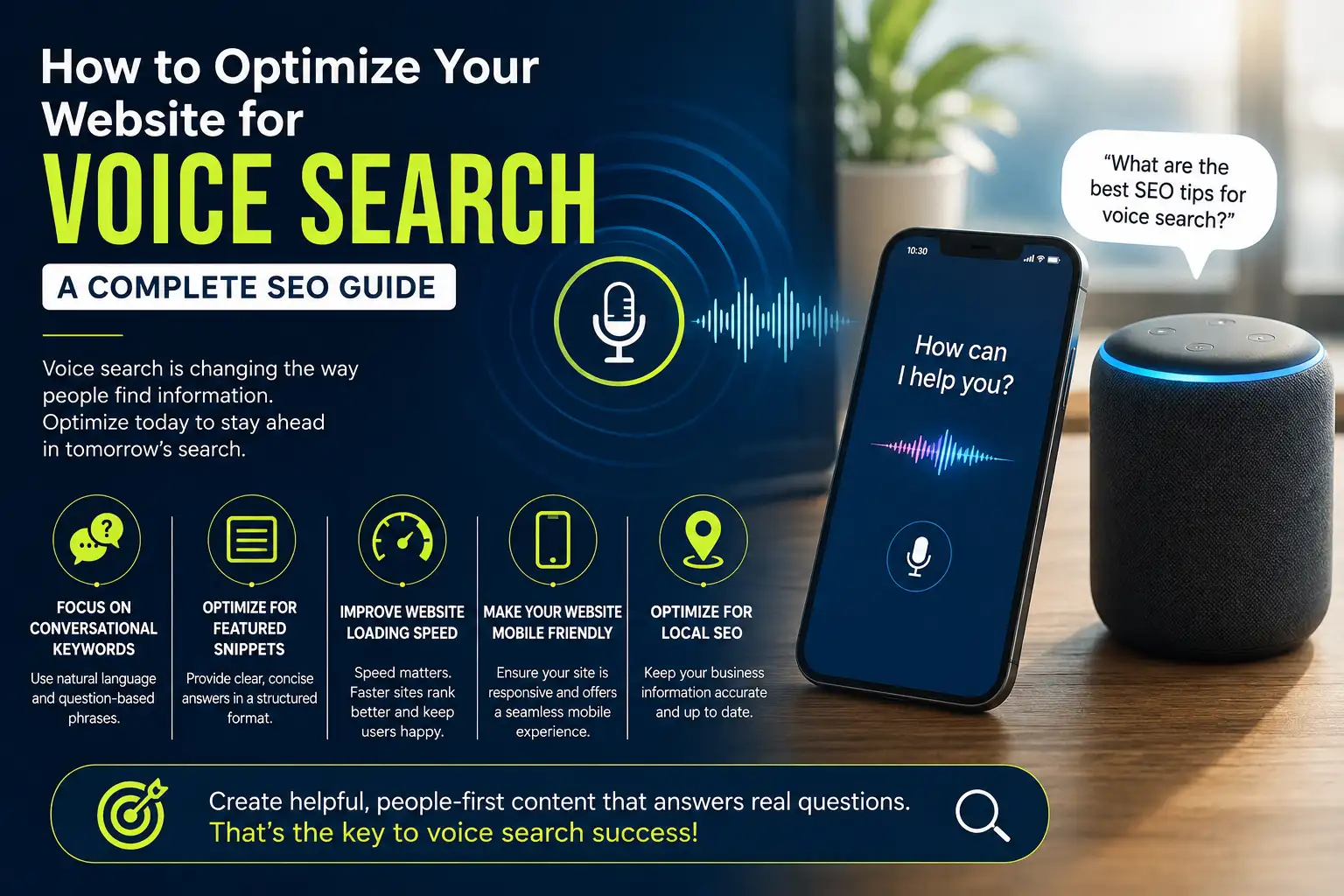
3.1 Focus on Conversational Keywords
Voice queries sound like real speech. So your keyword work should feel natural too.
Use:
- Long tail keywords
- Question based phrases
- Full, clear intent
Good examples:
Typed: “voice search SEO”
Spoken: “How can I optimize a website for voice search?”
Typed: “best running shoes”
Spoken: “What are the best running shoes for daily use
Build pages around the questions people ask. That is one of the best ways to Optimize for Voice Search and match real search intent.
3.2 Optimize for Featured Snippets
Featured snippets are special boxes that show a short answer at the top of search results. Google says they reverse the normal result format by showing the snippet first.
To improve your chance of earning one:
- Answer the main question fast.
- Use short paragraphs.
- Add bullets and numbered steps.
- Keep definitions tight and clear.
- Put key answers at the top of the page.
This is where featured snippets and position zero can help a lot. They can also support your SEO Guide for voice search because voice tools often pull direct answers.
3.3 Improve Website Loading Speed
Speed matters because users want fast answers. Google says Core Web Vitals measure loading performance, interactivity and visual stability. It also says good Core Web Vitals support Search success and user experience.
You can improve speed by:
- Compressing images
- Reducing heavy scripts
- Using caching
- Cleaning unused code
- Testing with Google PageSpeed Insights
A slow page hurts trust. It also hurts your chance to win the first answer.
3.4 Make Your Website Mobile Friendly
Google ranks and indexes websites based on their mobile versions. This is called mobile first indexing. Google also strongly recommends a mobile friendly site.
That means your page must:
- Fit all screen sizes
- Load fast on phones
- Keep text easy to read
- Make buttons easy to tap
- Avoid layout shifts
A mobile first site is not just nice to have. It is basic SEO now.
3.5 Optimize for Local SEO
Voice search and local search go hand in hand. People often ask things like:
- “Where is the nearest pharmacy?”
- “What time does the clinic open?”
- “Best cafe near me”
Google says complete and accurate business info helps a Business Profile show up in local search results. It also says businesses can improve local visibility by keeping details current.
Use these steps:
- Claim and verify your Google Business Profile
- Add exact hours, services and categories
- Keep your NAP details the same everywhere
- Add city and area names naturally
- Collect and reply to reviews
A trusted SEO Agency in Kochi can also help build local pages that match real voice queries.
3.6 Use Structured Data Markup
Structured data helps search engines understand your page better. Google says it uses structured data to classify content and understand what a page is about.
For Voice search optimization, the most useful schema types include:
- FAQ
- Local Business
- How to
- Organization
Google’s FAQ structured data page also notes that rich result features are not guaranteed. Schema markup improves visibility, but it cannot guarantee rankings.
Use schema to support clarity. Do not use it as a trick.
3.7 Create FAQ Pages
FAQs work well because voice users ask questions. They want quick answers in a clean format.
A strong FAQ page should:
- Use one question per heading
- Give a short answer first
- Add detail after the first line
- Keep the wording simple
FAQ pages can also support semantic keywords and related terms. This benefits both users and search engines.
4. Content Optimization for Voice Search
Content plays the biggest role in Voice search optimization.
Write like you speak. Keep it natural. Keep it easy.
Use these rules:
- Write in a conversational tone
- Use short sentences
- Answer the question right away
- Avoid stiff or formal phrasing
- Add related terms and phrases
Effective voice friendly content naturally includes long tail keywords, conversational phrases, structured data, and local SEO terms.
Also, make your answer pages useful for AI led search. Google’s AI features now surface links and support broader ways for users to find content Clear and helpful pages have a higher chance of appearing in search results.
5. Technical SEO for Voice Search
Technical SEO still matters. A lot.
Start with the basics:
- Use HTTPS
- Keep pages crawlable
- Submit a clean XML sitemap
- Check robots.txt
- Fix broken links
- Remove redirect chains
- Clean 404 errors
Google Search Essentials states that SEO helps search engines interpret your content and makes it easier for users to discover it. That applies to every device and every search mode.
For voice search, technical health builds trust. It also helps search systems crawl, index and serve your pages faster.
6. Voice Search and Local Businesses
Voice search can bring major benefits to local businesses.
Why? Because voice users often ask for:
- Nearby services
- Opening hours
- Directions
- Quick contact details
- Trust signals like reviews
Google says verified business details matter. It also says reviews are available in certain regions and help people search for businesses in Maps and Search.
So, for local brands:
- Keep your profile complete
- Add local landing pages
- Use nearby landmarks and area names
- Ask for honest reviews
- Reply to reviews with care
This is where Voice search optimization can drive leads, calls and visits.
7. Common Mistakes to Avoid
Many sites miss voice traffic because they repeat old SEO habits.
Avoid these mistakes:
- Ignoring mobile optimization
- Keyword stuffing
- Writing only for typed search
- Slow page speed
- Weak or missing schema
- Skipping local SEO
- Forgetting FAQ style content
These errors block clarity. They also make it harder to Optimize for Voice Search in a useful way.
8. Future of Voice Search SEO
Voice search is moving toward more natural, more useful and more interactive search experiences. Google’s recent Search Live rollout shows this shift clearly. Its AI features also point to a future where search answers feel more direct and more task based.
Here is what the future may bring:
- More AI powered assistants
- More voice led shopping and tasks
- Better support for smart home use
- More context aware search results
- More mixed voice, text and camera search
For SEO teams, the lesson is simple. Write for real people. Build pages that answer real questions. Keep pages fast, clear and easy to scan. This is the most effective long term approach to voice search SEO.
Conclusion
Voice search is no longer something businesses can overlook. It is now part of how people search, ask and decide. The brands that win will keep things simple, fast, local and useful.
Prioritize conversational keywords, featured snippets, local SEO, schema markup, mobile speed, and high-quality content. That mix will help you stay ready for both search engines and answer engines. The sooner you start Voice search optimization, the stronger your search future will be.
Improve your website to stay ahead in search rankings. Contact Accolades Integrated